September 7, 2026
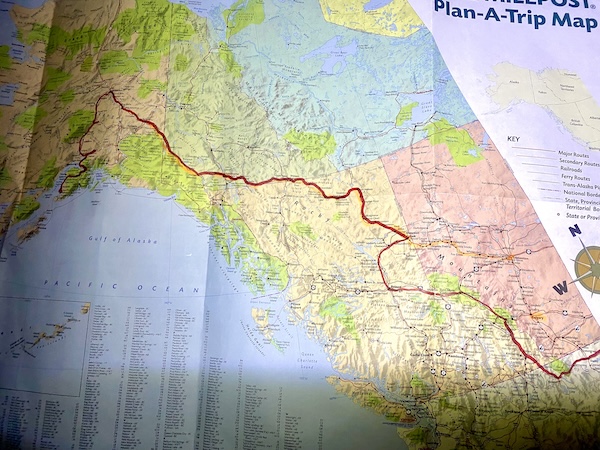
I would like to start today by mentioning that it is the one-month anniversary of this trip. Here’s a sloppy map showing my route (but this map starts in Montana, I left from Cleveland).
At the moment I am pulled to the side of the road somewhere in Mat-Su Valley, with the Matanuska River directly next to the van and evergreen-tree-covered mountains across the two-lane road. I think that’s where I am, anyway. My iphone maps aren’t working here so it’s a best paper-map guess.
I also think I’m on the Glenn Highway. I’ve noticed that no one uses the numbered names of the highways. Each segment, regardless of whether it is the same numerical name, has its own specific designation: Seward Highway, Denali Highway, Sterling Highway, Parks Highway, Alaska Highway, etc. Each of these is the road between two geographical places, like Sterling Highway, which runs to the end of the road on Homer Spit, becomes Parks Highway south of Anchorage, but both are the same (and only) road north. People ask me what routes I’ve driven and I’m totally at a loss to remember all the names.
I see that it’s been almost a week since I’ve written anything so I’ll try fill in the giant gap between Eagle Falls and Mat-Su Valley.
While I was cleaning the van and doing dishes in Eagle Falls (while Lucy napped in the sun), my sink sprouted a giant leak which I didn’t notice at first. I have a foot pump (which I hate and will be replaced during my next time-out for upgrades), and was wondering why I had no water pressure. Lots of water coming out of the tank, a tiny dribble coming out of the faucet. The rest, apparently, was shooting onto the wall, soaking the wood and wallpaper, puddling under Lucy’s bed, drenching the rugs, you get the idea. Good thing it was sunny – I ended up taking everything out of the van to dry, all doors open, and my van cleaning turned way more serious than intended.
Lucy and I hiked around Eagle Falls, which has tons of trails through the woods next to the river. Parts of the river had rapids and kayakers were playing in the falls. And to complete our cleaning spree, we went up the road to a combination laundromat/shower/gas station. I showered, the sheets and blankets and dog towels got clean, and that moment may have been the cleanest I’ve been since we left. I had to do the laundromat strip-tease so I could get every piece of clothing washed that I possibly could (the place was full of rough old men so I didn’t get too naked).
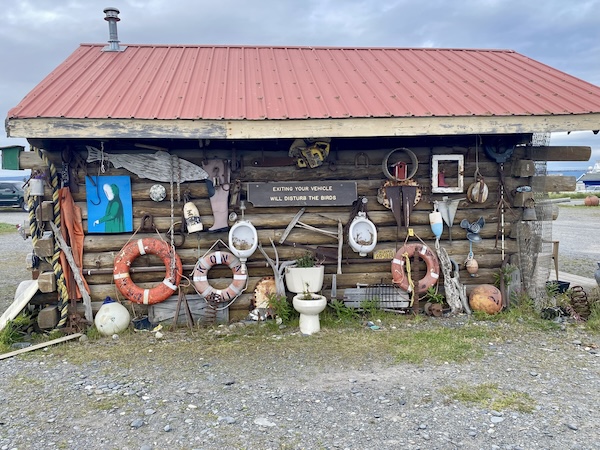
It’s too cold now for Lucy’s bath, but I did see a combo car wash/dog wash/laundromat/shower place – what a brilliant idea for the RV capital of the world. If it had a diner it would have been perfect.
I have been speaking to Kristie Hudson for a few weeks (months?) about my trip out here. Kristie and I paddled (drank) together on Kauai and haven’t seen each other in about 8 years, and she lives in Kenai, south of Anchorage. Her parents are homesteaders, which is fascinating to me. Both grew up in Alaska, but then at some point just planted their flag and said ‘this is my land now’ because no one else was on it and tamed their little bit of wilderness. Totally Little House on the Prairie with -50 degrees below zero and piles of snow. Or that’s how my imagination tells me it happened. Homesteading became illegal maybe 50 years ago out here (but without internet I can’t remember exactly how long ago). It still feels so old west, but with lifted pickup trucks and boats and ORVs.
Kristie and I met at the Sunrise Inn, had dinner and caught up, then I was back on the road south to get to my final destination. Along the way I stopped at a random pull-off with tons of open space and trails in front of the foothills. Lots of strange earth mounds. Lucy and I climbed one and saw all these people bent over or kneeling, filling buckets with something. They were picking blueberries! The little plants were about two inches tall, and carpeted the entire area like a ground cover. And they were so good.
I have always known what a “High Bush” blueberry is, and now I’m thinking these must be the “Low Bush” variety. Again, no internet so that might not be remotely factual. I’ll probably forget by the time I have reception so if someone is interested and wants to text me the answer I’d appreciate it.
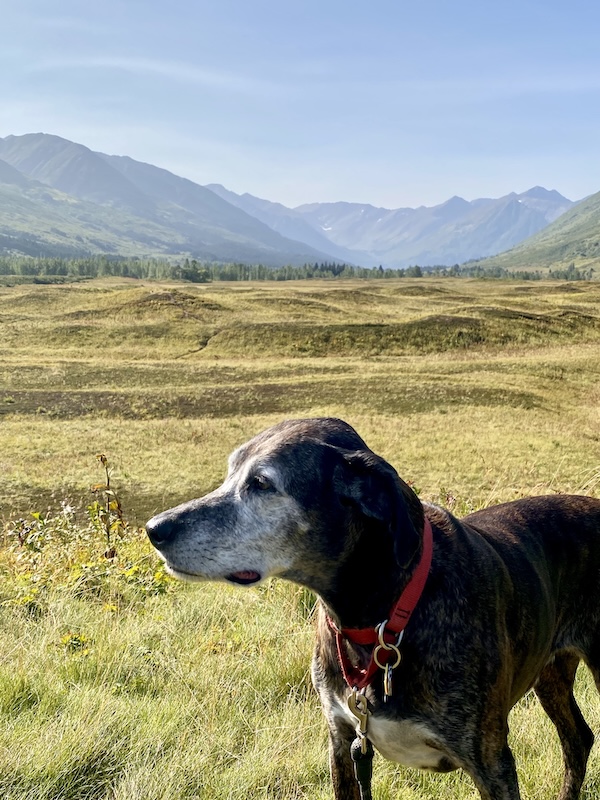
Strange place for picking blueberries
Kristie told me that the color of the Kenai river is her favorite color. The first thing that popped into my head was the baby-poop brown of the Cuyahoga, so I was intrigued. And when I turned a bend in the road in the Kenai Peninsula and finally saw it, I nearly drove the van straight in for a super close-up. It was stunning, and I’ve been thinking for days what the exact description might be. Think of a turquoise that is glowing. Like looking at the sun through a fat slab of blue raspberry jello, maybe. I’ve never seen a color like it.
My last stop in Alaska before turning back was Homer Spit, the literal end of the line.
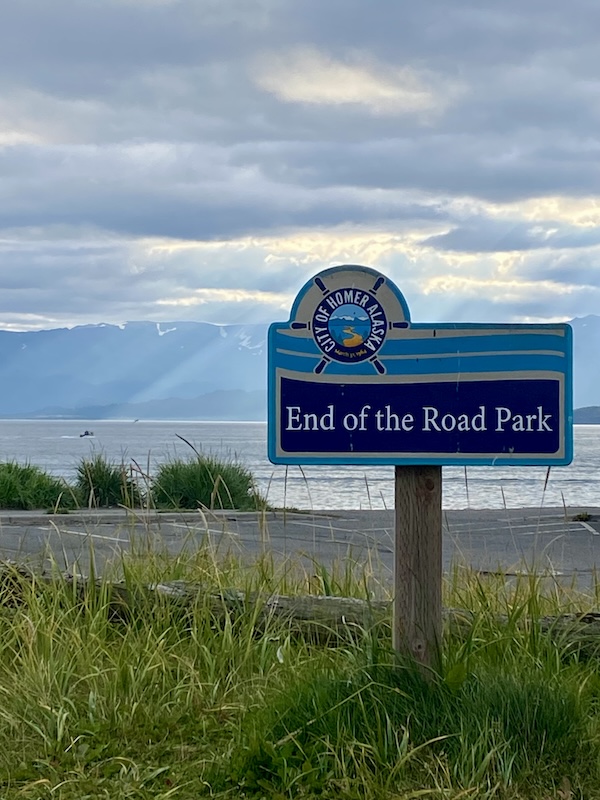
Kenai is the start of a peninsula, then south to Homer, then south to Homer Spit. The spit is a tiny strip of land with a gigantic harbor for fishing boats, ferries, and cruise ships, RV parks, quirky tourist shops, and restaurants. It might be 6 miles long? I don’t know.
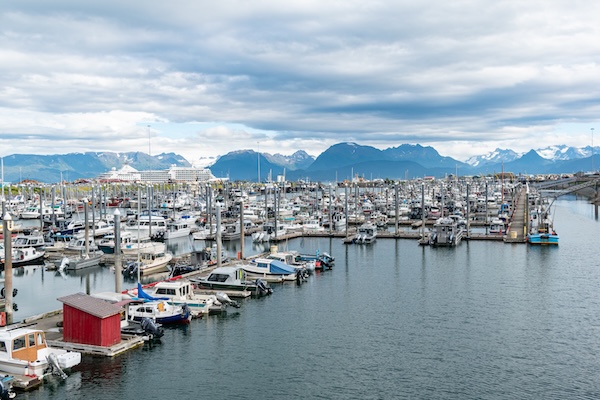
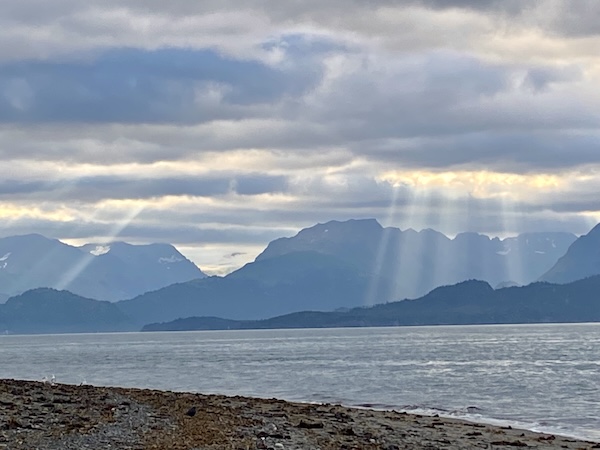
One side borders the Cook Inlet, with the Aleutian Island Chain to the west and Kodiak Island to the south. The east side is the Kachemak Bay. If you were to sail counter-clockwise from Homer Spit around the bottom of the Kenai Peninsula you would reach Valdez in the Prince William Sound, home of arguably the most famous oil spill ever. That is another place I regret not visiting, but I’m starting to get worried about snow in the mountains and it would add at least another couple weeks. I haven’t passed the road south to get there yet (Richardson Highway) so it is still a remote possibility. The road runs along the Trans-Alaska Pipeline, from Valdez to the furthest north at the Arctic Ocean.
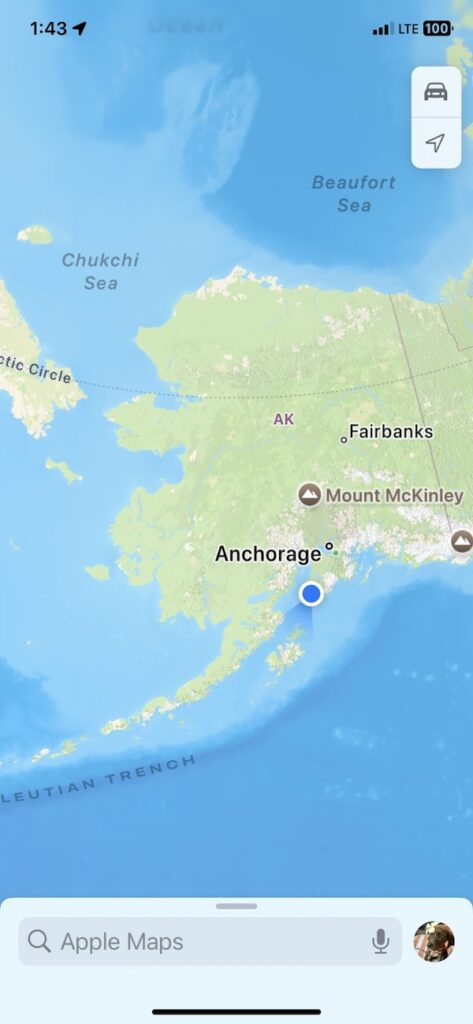
Lucy and I stayed at the Homer Spit Campground, at the very tip of the land. It was not a campground that I enjoyed since it is just RVs packed together in a dirt lot, basically. I like some space. But the selling point (besides not wanting to drive anymore) was the miles and miles of beach to walk. I had a nice ocean-front spot so I could lay in bed and look at the water, with mountain chains as far as you could see. It was another of those anxiety-inducing places, so much rugged wilderness and open space. Or, it was open space when I pulled in. I forgot it was a holiday weekend so it got really crowded really quickly. Not like summer-peak-tourism crowded, but Melissa crowded. Kristie told me that the way through the Kenai Peninsula, from Homer to Anchorage, is a bumper-to-bumper affair in the summer. No thanks.
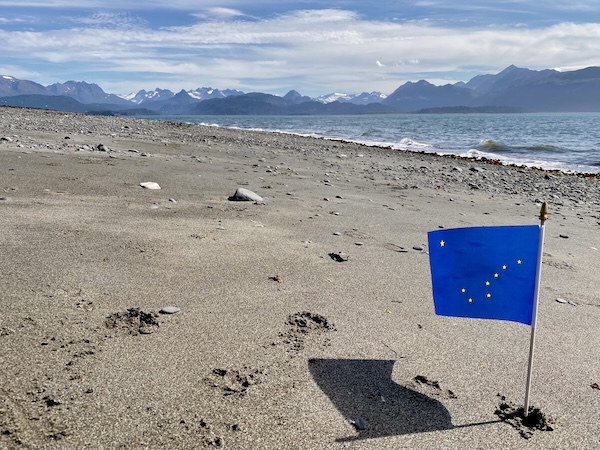
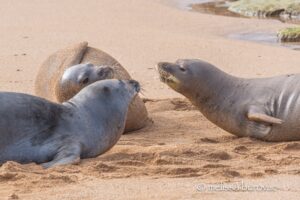
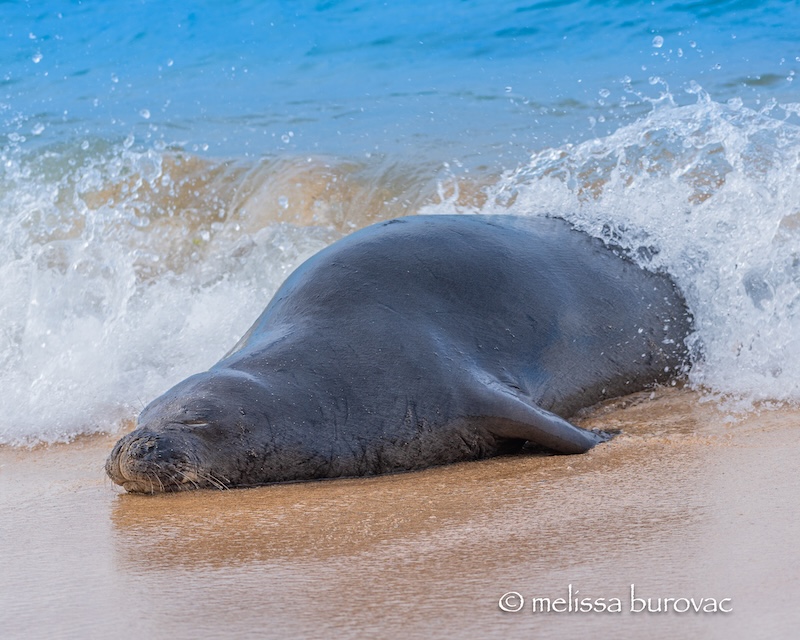
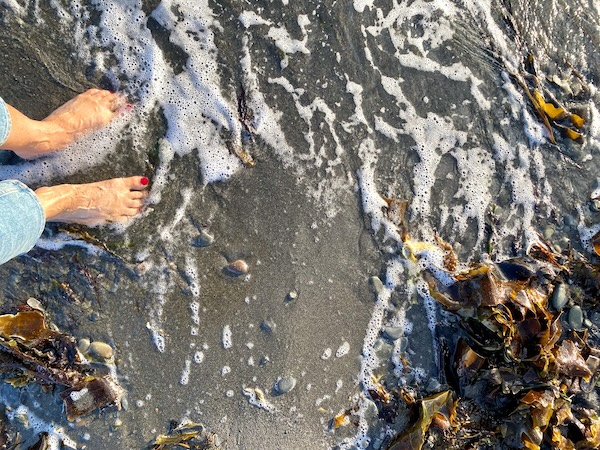
Lucy and I stayed three days, walking for miles on the beach and napping. Lucy was happy to get some no-drive time. The overwhelming smell was fish and rotting seaweed, typical fishing village. Lucy did not trust the seaweed on the beach. We saw otters and seals, but almost no wildlife except the enormous crows. The first time I saw a seal I thought it was a person swimming and immediately wondered where my goggles were packed. But then I remembered this is not Kauai and there’s no way I was putting more than my toes in the water. Standing on the beach staring at glaciers in the mountains does not inspire me to swim. So we walked and walked.
I thought this would be a good place to see eagles, what with the thousands of fishing boats in the harbor. I saw one. A single eagle. I saw it four times, and it must have been the same one because I was out every morning before sunrise and out every evening through sunset and dusk, and only one eagle flew by, on the same path, at the same time. I’ve been camping by rivers, lakes, ponds, oceans, bays, mountains, forests, streams, borrow pits – and I’ve seen one single eagle. It’s disappointing. Kristie told me the easiest way to find one is to go to the dump, where hundreds are flying around eating garbage. Not the optics I’m looking for (photo-wise) but I should have gone near Anchorage just to see that.
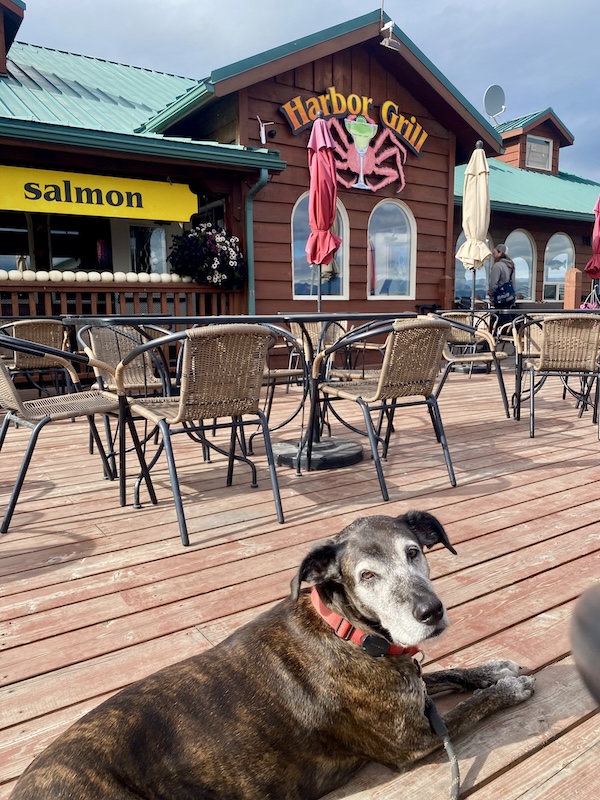
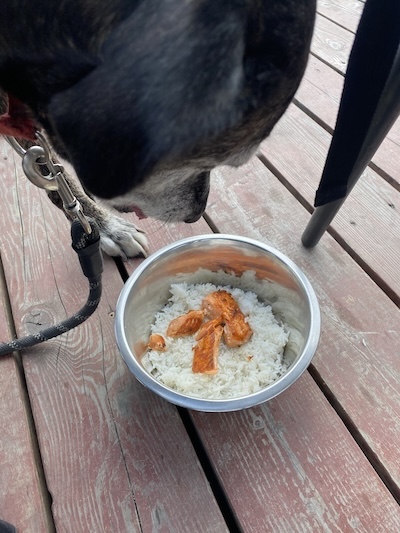
On one of our walks we stopped at a restaurant with an outdoor deck. Lucy was allowed on, so this was my stop for seafood. I got halibut fish and chips, with an Alaskan ale. Amazing. The restaurant had a dog menu as well, and I ordered Lucy a $15 dinner of salmon and rice – a little bribe because we have so much more driving to do. Her salmon looked so good I wanted to try it but I was not quick enough.
The final day of my Homer Spit stay was rain, with days of rain forecasted on the way. I read a book and watched the crows out my back window. Every so often I went outside and left a handful of raw almonds on my picnic table. The crows flocked down and hopped off with them, stopping to hold the nut between their talons and peck it into tiny pieces. The only other birds I saw (except the millions of sea gulls) were these small, sparrow-like birds. They flew in and out of the van’s front grill and kindly cleared all the dead bugs from the clogged filter.
I saw Kristie again in Soldotna as I started the trip backwards to retrace much of my path. I got to see Mahina (dog), and we had a giant breakfast. She left me with different types of frozen salmon and jars of preserved smoked salmon, and tomatoes and cucumbers from her garden. Which I think was yesterday, but all the days kind of blur together, and brings us to the Mat-Su Valley area. From here my next stop is Tok (unless I decide Valdez is a go), then over the horrible frost-heave road back to the Yukon and south. At some point I’ll pick the route I’ll take to Vancouver, BC, but I have at least a week to worry about that.
I pulled out my book to see if I should go to Valdez, and remembered that I wanted to go to Haines, which is near Skagway. After Tok, I could cross into Yukon, then connect to the Haines Highway south to get back into Alaska. That entire area is comprised of islands along the coast, serviced by ferries. I might be in Alaska for another month. This place is incredible. I could drive to Haines, load the van onto a ferry, stop at Juneau, cross the border on the water, then debark at Prince Rupert in British Columbia. Or, I could drive to Valdez and take the ferry through the Gulf of Alaska to Haines, which seems like a multi-day journey just from looking at a map. That’s probably stupid expensive, and I doubt Lucy would appreciate it. Ideally, now that I’m looking at this part of the state, I should have stayed on the Sterling Highway until it dead-ended southeast of Anchorage, then taken the ferry across the Prince William Sound to Valdez. That would have saved hundreds of miles of driving. But too late for that now.
For only having like two actual roads in this entire section of the world, there are endless travel possibilities. And now I’m completely indecisive about where to go next. Definitely east until this section of highway ends, but then… ? I wanted to drive more today, I’ve only gone about 125 miles, but now that I’ve been sitting next to this river for a few hours I can’t imagine finding a better place to spend the night. So I’ll stay here and look for eagles and moose, sleep on the travel thoughts, and maybe wake up with a good plan.
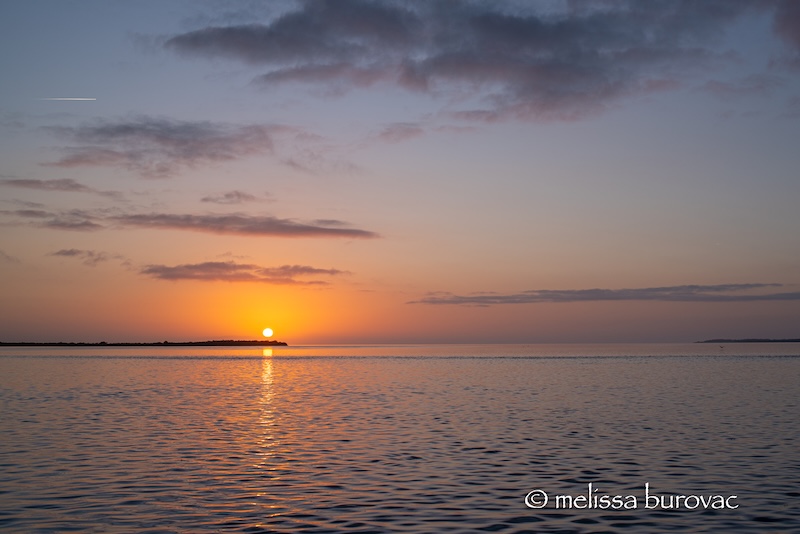
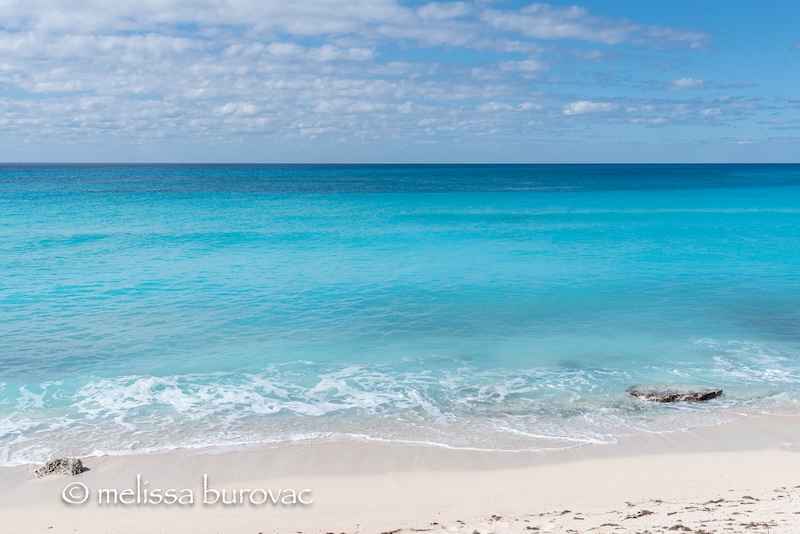
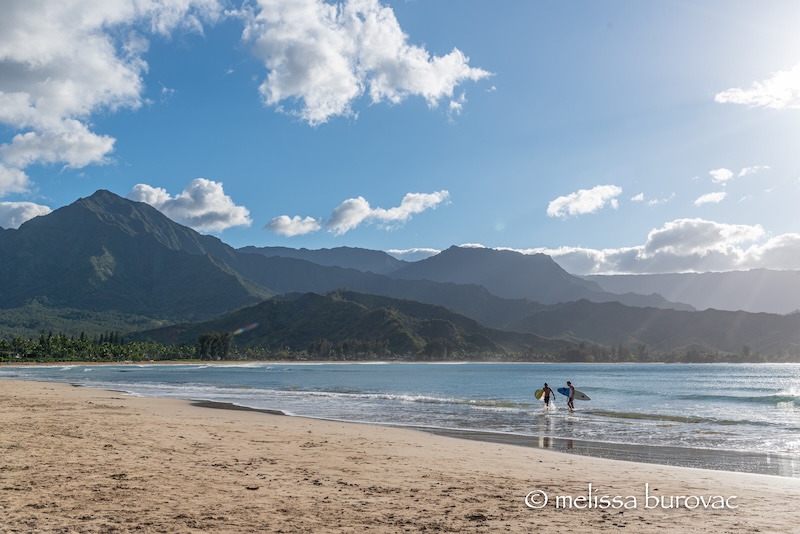
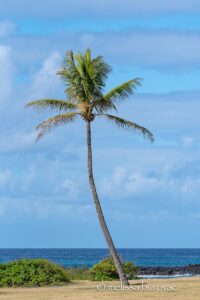
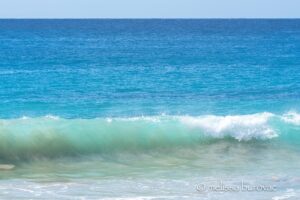
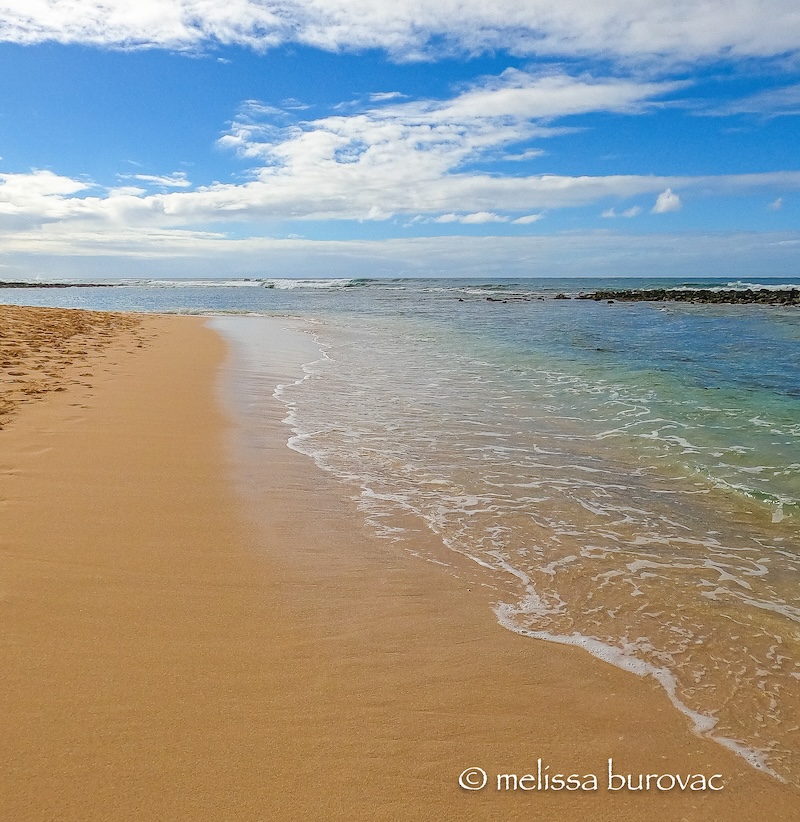
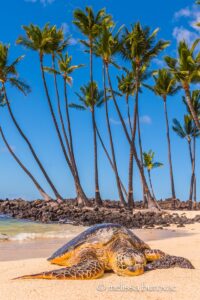
BTW, these pics are mostly from Homer Spit because… I’m tired.